
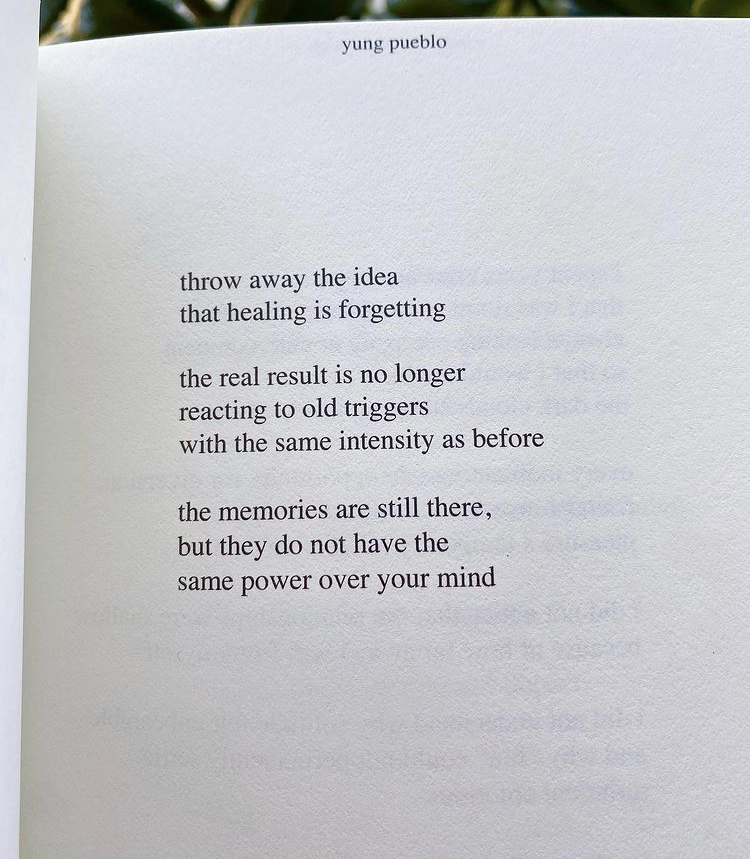
American poet, with proud Ecuatorian roots, Yung Pueblo, challenges us to ‘throw away the idea that healing is forgetting” and I suscribe to that. There is quite a bit of confusion regarding what one person thinks healing means and what the next one understands by the exact same word. So, this time, this blog post is on Healing, Epigenetics Neuroplasticity.
The Oxford Learner’s Dictionary (definition) entry for ‘Healing’ is this:
“the process of becoming or making somebody/something healthy again; the process of getting better after an emotional shock.”
The meaning of the word Healing is both literal -like in medical and physical healing: the healing of a wound-, and figurative, as when referred to as mending a fragile aspect of an international affair or political relationship. However, the term has other areas of meaning, as in mental, emotional or spiritual healing.
Healing is not the sole responsibility of a well trained and well seasoned professional healer, on the contrary. Healing is triggered in an individual when he/she is ready to take responsibility for their actions, decisions, and ultimately to accept and embrace their story: familial, historic, cultural, of gender, societal, etc, all narratives that weave the sustenance of the Self. If such individual is not ready to act in consequence with the healing therapy provided, it is basically as if that same person had gone to the movies, enjoyed part of the film, fallen asleep most of the movie, then awoke 10 mins before the ending and somehow felt restored -yet they cannot tell what the plot was-. In terms of their capability remembering bits of this movie, would you trust them to provide a decent synopsis of it? No, right? Unfortunately, some sessions may sound lovely and could have had some impact in the individual, but the exponential effect of Healing gets actually integrated when the person who goes to this kind of therapy participates not just during the session, but specially, and more importantly, after. Why? Because even when Healing may still sound ‘woo-woo’ for some people, nowadays it is much clearer that it is not, and that multiples disciplines have stemmed from the idea that if we can change our brain, we can change our behaviour, and we can even change our beliefs.
Thanks to Epigenetics, we now know that not because someone comes from a family line of diabetics this person is also bound to become one. Epigenetics explain that we are not necessarily more influenced by our genes than by our environment. According to neuroscientist and MIT professor Dr. Tara Swart “Epigenetics is the influence of the environment on the expression of our genes. Certain lifestyle behaviours and deeply held beliefs can switch on or off the expression of certain traits through chemical processes like methylation. These include diet, exercise, smoking, alcohol, stress, and intergenerational trauma. Through unblocking subconscious beliefs that are barriers to you being your best self, you can manifest good health, wealth, and even longevity.” And this is not ‘magic’, it’s backed up by science.
With these two first concepts being clear, we should take a look now at ‘Neuroplasticity’, which basically refers to the possibility, and the fact, that our neurons are ‘flexible’ enough to change their structure, and ultimately, the relationship to each other, the way they connect, which is well known as synapsis. I will cite again Dr. Swart in a wider definition of the concept: “Neuroplasticity is the incredible ability of the brain to change throughout our lives. It’s the fact that every time we learn or do something new, our brain changes. Our brains are also shaped and molded by everything we experience -both positively and negatively-. We can take agency over this to expand our horizons and manifest the things we want in life, rather than reinforcing the negative narrative in our subconscious brain. Repetition and emotional intensity are key to creating lasting changes in our brain.” Through repetition, you might begin not only to release dysfunctional patterns, but also to build new neural pathways that will gear you towards becoming your best version, your Higher Self.
In order to create more and/or different synapses among neurons or, put bluntly, ‘to rewire the brain’, we must interrupt the ‘autopilot’ -conditioned responses and impulses ingrained in us through childhood and other life stages trauma- the or so-called fight or flight mode, by slowing down the brain waves. We can effectively shift our brain waves from Beta, into Alpha or Theta -AKA from the conscious to the subconscious mind-, through hypnosis and meditation. In this state of receptivity, we are subject to attain and succeed at accessing Neuroplasticity. After identifying our limiting belief system, we can start working down the aisle of its several layers and start transforming our potential Self, a much more tolerant, compassionate, considered, and empathetic one.
Thus, every time we gift ourselves a healing session, we must have clear that the healer’s work is as important as our own to tend to our problem or process. We need to acknowledge the fact that openness pays off when we establish a relationship with a professional in the field and that hopefully, besides being empathetic to the client’s situation, this person could also be able to help you understand the benefits of the therapy, how it works -if it addresses a specific behaviour, change of certain subconscious limiting belief(s), or not-, whether it requires a second, third, etc, session for the same purpose or not; and last but not least: if what is asked from us is either a giant leap of faith or just enough attention to understand that we might be about to embark upon intentional methylation, intentional synapses, or intentional transformative neuroplasticity.
It is with great pleasure that I encourage you to try it for yourself and see how not only your present could be impacted by some sort of healing therapy, but also your relationships, and, inevitably, your future. There are plenty of choices and plenty of healers around. I specialize in Thetahealing, and also provide readings of the patient’s Akashic Records (the Soul’s library), and of Runes, which is an ancient Norse oracle that provides actionable guidance for the consultant. However, it is my hope that you look for and find a professional who resonates with you and your story. If it is me, I’ll be honoured to assist you. If I am not, I wish you a marvellous and rewarding journey finding one you resonate with, and in the future that this upholds for you…

BATHE ME IN THE DISTILLED WATERS OF EVOLUTION
“A Prayer for Honouring Transformation”
Pixie Lighthorse